Series Page
Tasks
Create or remove a series of points.
Define the series name, visibility and view type.
Customize additional series options and legend point options.
Enable and customize the Top N Values feature.
Page Elements
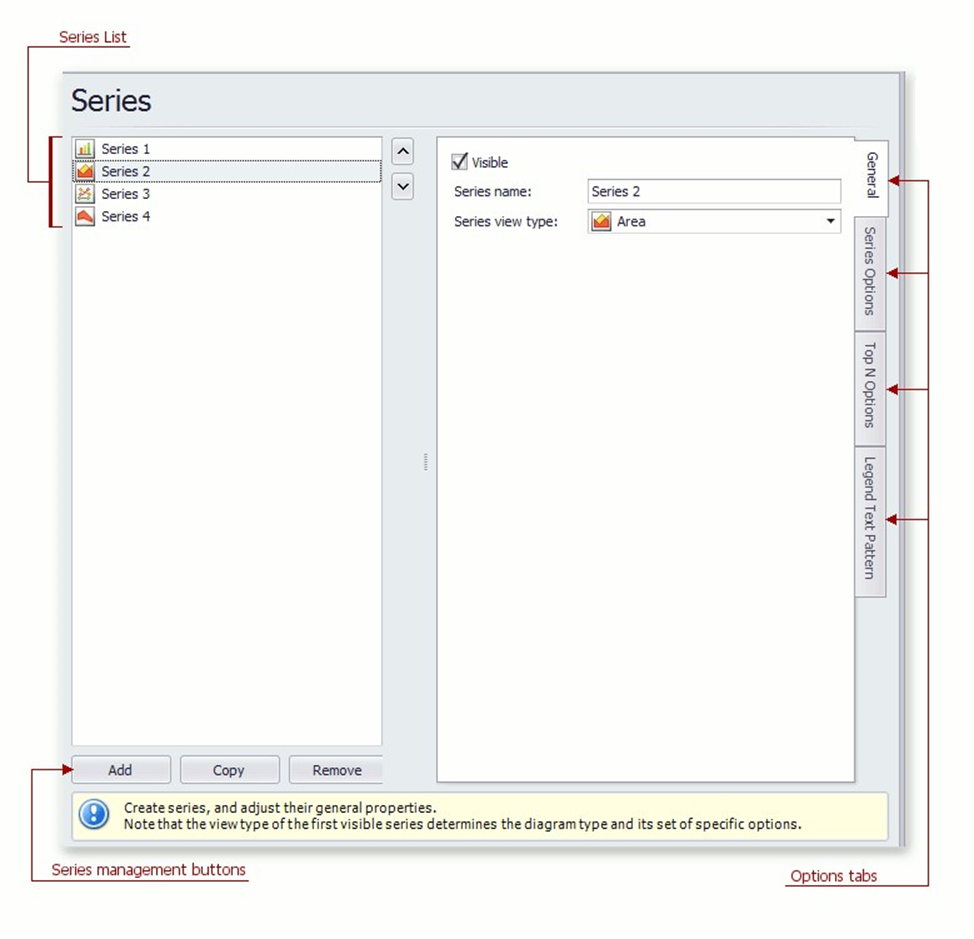
Series List
This list displays all available series. You can click list entries to access properties of the corresponding series. To switch between series, use the and buttons.
Series management buttons
Use the Add, Copy and Remove buttons to manage the series collection.
Options tabs
The following tabs are available on this page:
General
Choose whether the selected series should be visible, define its name, and select a view type.
Series Options
Specifies argument and value scale types, the point sort order, visibility in the legend, whether the legend is checked, and legend text.
Top N Options
Specifies whether the Top N Values feature is enabled, and allows you to control this feature's options.
Legend Text Pattern
Specifies the format of values displayed in the chart legend.
Data Page
Tasks
Provide data for a chart;
Bind a chart or individual series to a data source;
Customize an argument and a value scale type;
Customize the view type of auto-generated series; Apply data filtering and sorting; Adjust the Pivot Chart settings.
Page Elements
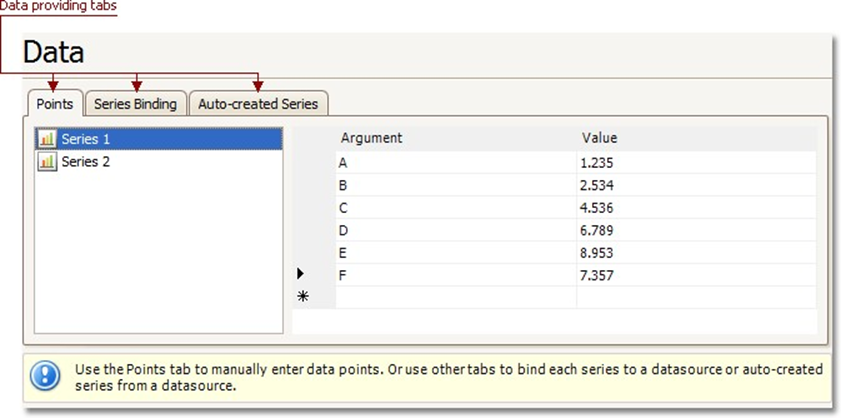
You can provide data for a chart using the following tabs.
Points tab
Series Binding tab
Auto-created Series tab
Points Tab
Use it to manually enter data points for series.
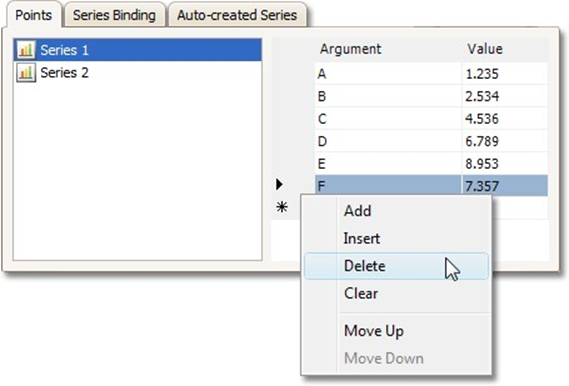
Note that valid Argument and Value entries must correspond to the Argument scale type and the Value scale type selected for the appropriate series on the Series Page. Otherwise, an error message will be invoked.
Series Binding Tab
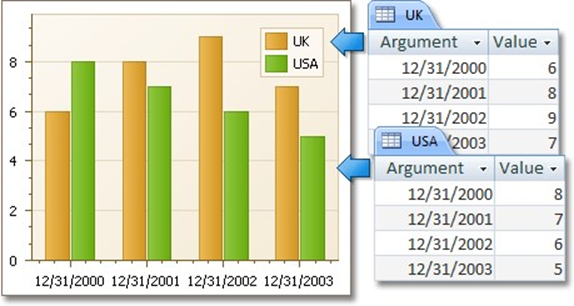
Use it to provide specific data binding options for each series.
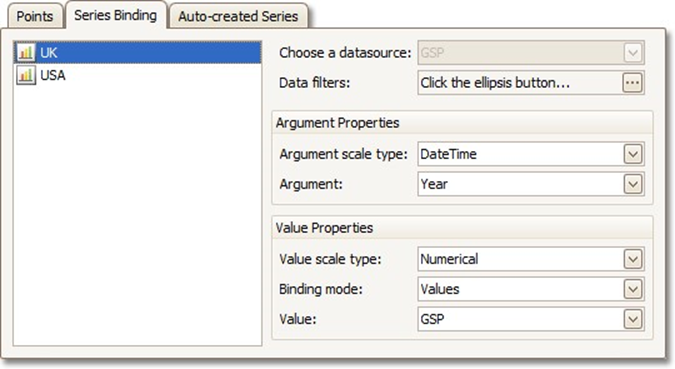
The following illustration demonstrates how it works.
Auto-created Series Tab
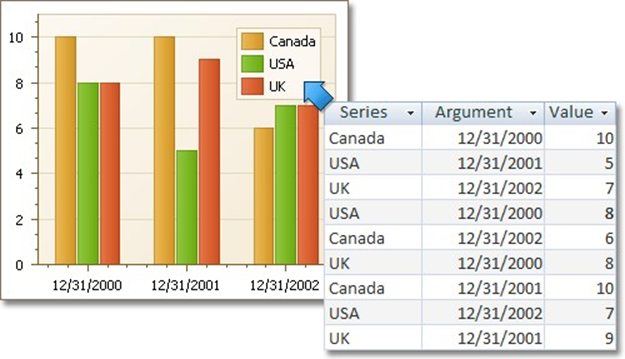
Use it to specify data columns used to generate series, as well as the series view type and other options like sorting, filtering and name template.
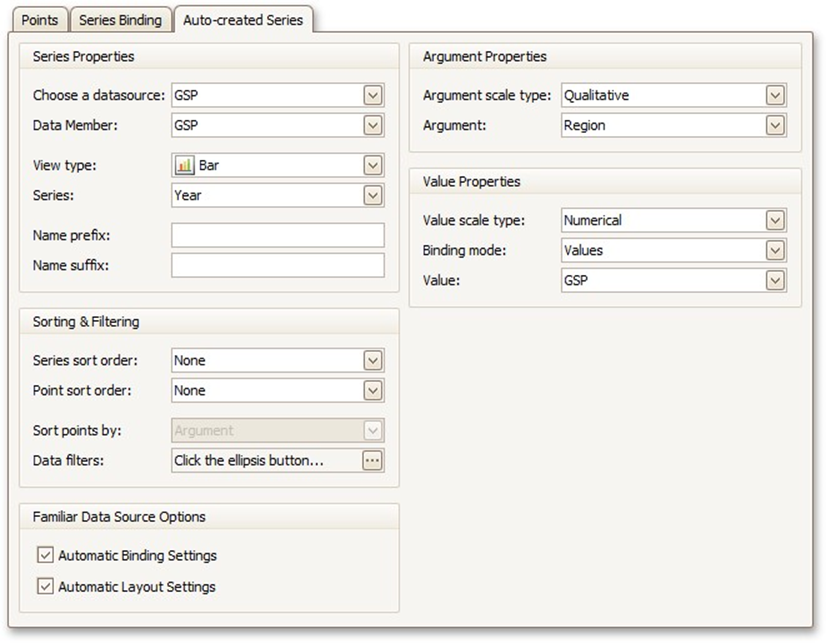
The following illustration demonstrates how it works.
For familiar data sources (such as Pivot Grid), you can choose to automatically adjust the binding and layout settings of your Chart.
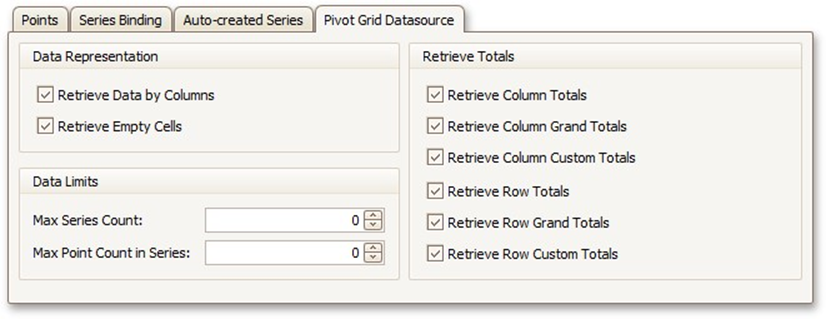
And when you set a Pivot Grid as a Chart's data source, the Pivot Grid Data Source tab becomes available.
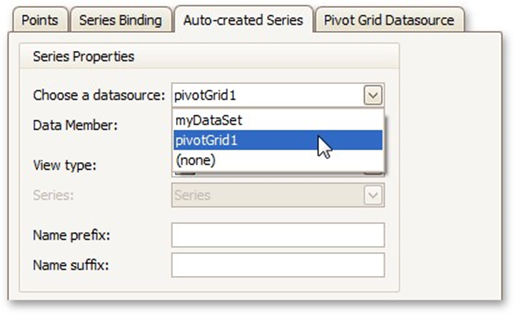
On this tab you can adjust various Pivot Chart options.